Small businesses win back past customers before the holidays by leveraging the high open rates of text messaging alongside the informative, high ROI nature of newsletters. Integrating automated email and SMS marketing for small business allows for timely holiday outreach that maximizes engagement and drives sales. This dual-channel strategy captures attention instantly while providing the detailed information necessary to convert inactive buyers.
Watching your customer database grow silent just as the holiday season approaches is a common, yet costly, frustration for local business owners. While most entrepreneurs focus solely on expensive new lead generation, they often overlook the hidden revenue sitting in their list of lapsed clients. These individuals have already trusted you once, making them your most valuable asset for a successful Q4. To turn these dormant contacts into active buyers, you must master the synergy between professional email campaigns and immediate SMS alerts. In this guide, we examine a practical three part win back sequence and explore how the 80/20 rule can optimize your messaging strategy. You will learn to navigate SMS compliance and automate your outreach, ensuring your business stays top of mind without losing the authentic, personal connection that drives local loyalty.
The Power of Re-engaging Lapsed Customers Before the Q4 Rush
As the fourth quarter approaches, advertising costs on platforms like Google and Meta typically spike because large retailers flood the market. For a Newark service provider, trying to outbid national brands for new leads is often a losing game. Instead, the most profitable path lies in your own database. Re-engaging a dormant customer is significantly more cost-effective than acquiring a fresh lead, particularly when you leverage email and SMS marketing for small business.
Research indicates that automated campaigns can generate up to 320 percent more revenue than non-automated ones. This efficiency stems from timing; automation ensures you reach the right person exactly when they are most likely to convert. For a local service business, a lapsed customer is generally defined as someone who has not booked an appointment or made a purchase in 90 to 180 days. They already know your brand and trust your work; they simply need a relevant nudge to return to your calendar.
Consider the seasonal shift in Northern New Jersey. An HVAC contractor should be targeting homeowners who haven't had a furnace inspection since last year. Similarly, a salon in the North Ward should be reaching out to clients who haven't visited in three months to secure their holiday party bookings before the December rush fills the schedule. Using automated marketing packages allows these businesses to maintain a professional presence without the burden of manual outreach. By focusing on those who have already crossed your threshold, you bypass the expensive bidding wars of Q4 and build on established loyalty. You can learn more about our AI powered platform and how it identifies these opportunities, or explore our affordable subscription plans to start your win-back sequence today.
Email vs SMS Marketing for Small Business: Understanding the Roles

Successfully bridging the gap between a dormant client and a booked appointment requires understanding the distinct mechanics of your digital channels. While both tools are central to email and SMS marketing for small business, they serve different functions in the customer journey. SMS is built for speed and urgency, whereas email is designed for depth and retention.
Research highlights the immediate impact of mobile messaging; SMS boasts a 98 percent open rate, with 90 percent of those messages being read within just three minutes. This makes text messaging the ideal "hook" or "reminder." It is perfect for alerting a client to a sudden opening in your schedule or providing a direct link to a booking page. Conversely, email remains the powerhouse for detailed storytelling and high-value visuals. With an average ROI of $36 for every $1 spent, email is where you provide "the value," such as a monthly newsletter or a deep dive into a new service offering.
Effective local campaigns often follow the 3:3:3 rule. You have three seconds to catch a customer's attention, three minutes for them to digest the core message, and three hours for them to act before the mental window closes.
Channel | Primary Role | Key Metric | Best Use Case |
|---|---|---|---|
SMS | The Hook | 98% Open Rate | Urgent alerts, booking links, reminders |
The Value | 36x ROI | Educational content, visual portfolios, newsletters |
A Newark realtor or a landscaper uses these tools differently than a giant e-commerce brand. While a global retailer might blast millions to sell a generic product, a local professional uses automated marketing packages to manage a finite calendar. A landscaper might send an SMS to alert clients of a frost warning, followed by an email explaining the specific winterization steps their team performs to protect perennials. You can learn more about our AI powered platform and how it coordinates these roles to ensure your business stays top-of-mind without becoming a nuisance.
Step by Step: The Simple Three Part Holiday Win Back Sequence
Deploying a coordinated campaign requires a structured timeline rather than random message blasts. A precise 7 to 10 day win-back sequence strikes the perfect balance between helpful engagement and conversion pressure. When local service providers search for effective win-back examples, the most successful models always follow a value-first progression. This framework prevents your business from seeming predatory or desperate while systematically filling your appointment book.
When executing email and SMS marketing for small business, the sequence begins on Day 1 with an email focused entirely on relationship restoration and seasonal value. For a Newark HVAC or residential contractor, this email functions as a "Winter Ready" home safety check, offering a complimentary radiator maintenance guide or a practical furnace checklist. For a salon, it focuses on combating the effects of harsh New Jersey winds on skin and hair. There is no aggressive sales pitch in this initial touchpoint; the goal is to reappear in the client's inbox as an authoritative, helpful local expert.
On Day 4, three days after the initial email, you transition to SMS to deliver an exclusive "Early Bird" offer. Because text messages command immediate readability, this is the moment to inject real urgency. A salon can promote a "Holiday Glow" package, granting lapsed clients first access to prime November and December appointment slots alongside a small service bonus if they book within 48 hours. The text message remains brief, includes the client's name, and concludes with a direct tracking link to your booking portal.
The sequence wraps up between Day 7 and Day 10 with a final call hybrid message. This step utilizes a targeted email to those who opened the first message but failed to schedule, backed by a final afternoon SMS reminder to non-responders. The copy centers entirely on real calendar scarcity, reminding the customer that holiday booking slots are nearly full and remaining times will be opened to the general public the following morning.
Managing these multi-channel timelines manually during your busiest operational quarter can easily lead to dropped leads. Utilizing automated marketing packages ensures that each message drops at the exact operational interval required for maximum psychological impact. By organizing your autumn outreach into this clear three-part window, you convert dormant database records into predictable seasonal revenue while keeping your hands free to run your day-to-day operations.
Applying the 80 20 Rule to Your Holiday Messaging
Maintaining a presence in a customer's inbox without becoming a nuisance requires adhering to the 80/20 rule. This principle dictates that 80 percent of your communications should provide pure value or education, while only 20 percent focus on direct sales. When executing email and SMS marketing for small business, this ratio ensures your brand remains a welcomed guest rather than an ignored intrusion.
Value-based content establishes your expertise and reinforces your role within the Newark community. For example, a local restaurant might share a signature holiday cocktail recipe or a guide to professional plating for home gatherings. A plumbing contractor could provide a practical checklist for preventing frozen pipes during an Ironbound cold snap. These educational touches build a trust bank with your audience, positioning your business as a helpful neighbor rather than a persistent salesperson.
When you eventually send that 20 percent sales message, such as a limited-time booking link for a winter furnace tune-up or a holiday hair styling package, the customer is far more inclined to convert. They perceive the offer as a helpful solution from a trusted source rather than a cold solicitation. Implementing automated marketing packages allows you to schedule these value-adds in advance, ensuring your brand stays top-of-mind through helpfulness long before you ever ask for the sale.
SMS Compliance and Best Practices for Local Service Providers
While the 80/20 rule governs your content, federal regulations and common courtesy govern your delivery. For a Newark service provider, staying compliant is about protecting your local reputation as much as it is about following the law. The foundation of professional email and SMS marketing for small business is explicit consent. You must only message clients who have opted in, and every text must include a clear way to unsubscribe, such as "Reply STOP to opt out."
Research confirms that SMS works best when it is brief and leads to an immediate action. Local businesses should keep texts short, personal, and inclusive of a direct booking link. Timing also dictates your success. Sending a promotional message at 6 AM or late at night is intrusive and leads to high unsubscribe rates. Sticking to standard business hours, generally between 9 AM and 8 PM, ensures you respect the personal boundaries of your North Jersey neighbors. Utilizing automated marketing packages helps manage these timing constraints automatically, preventing accidental off-hour sends. By following these rules of the road, you maintain a professional image while leveraging affordable subscription plans to grow your holiday revenue safely.
How to Automate Your Holiday Marketing Without Losing the Personal Touch

For a Newark contractor or restaurant owner, November and December are often the most demanding months of the year. Attempting to manually draft emails or remember to text a list of one hundred lapsed clients usually falls to the bottom of the to-do list. This is where automation transforms from a luxury into a necessity. True automation does not mean sounding robotic; it means ensuring that a personalized, high-value message reaches your customer exactly when they need it, regardless of how busy your shop floor is.
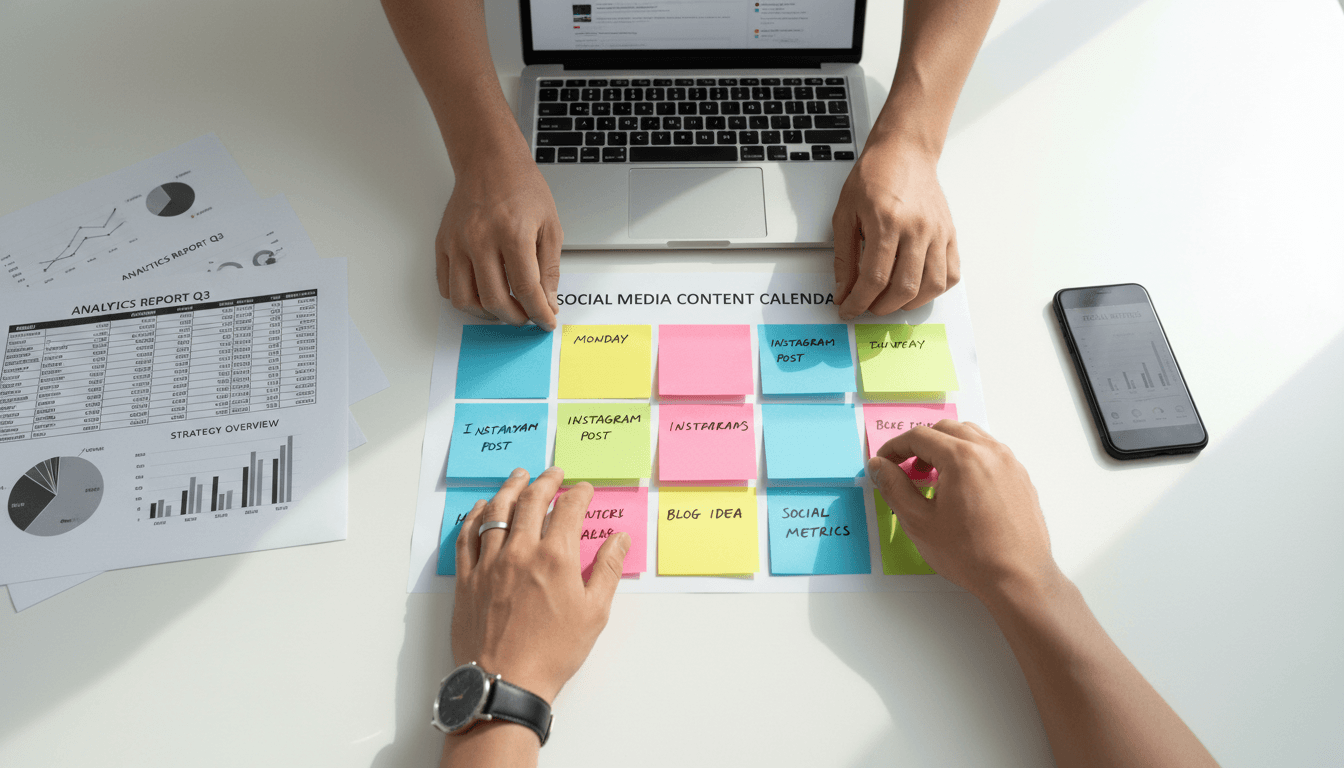
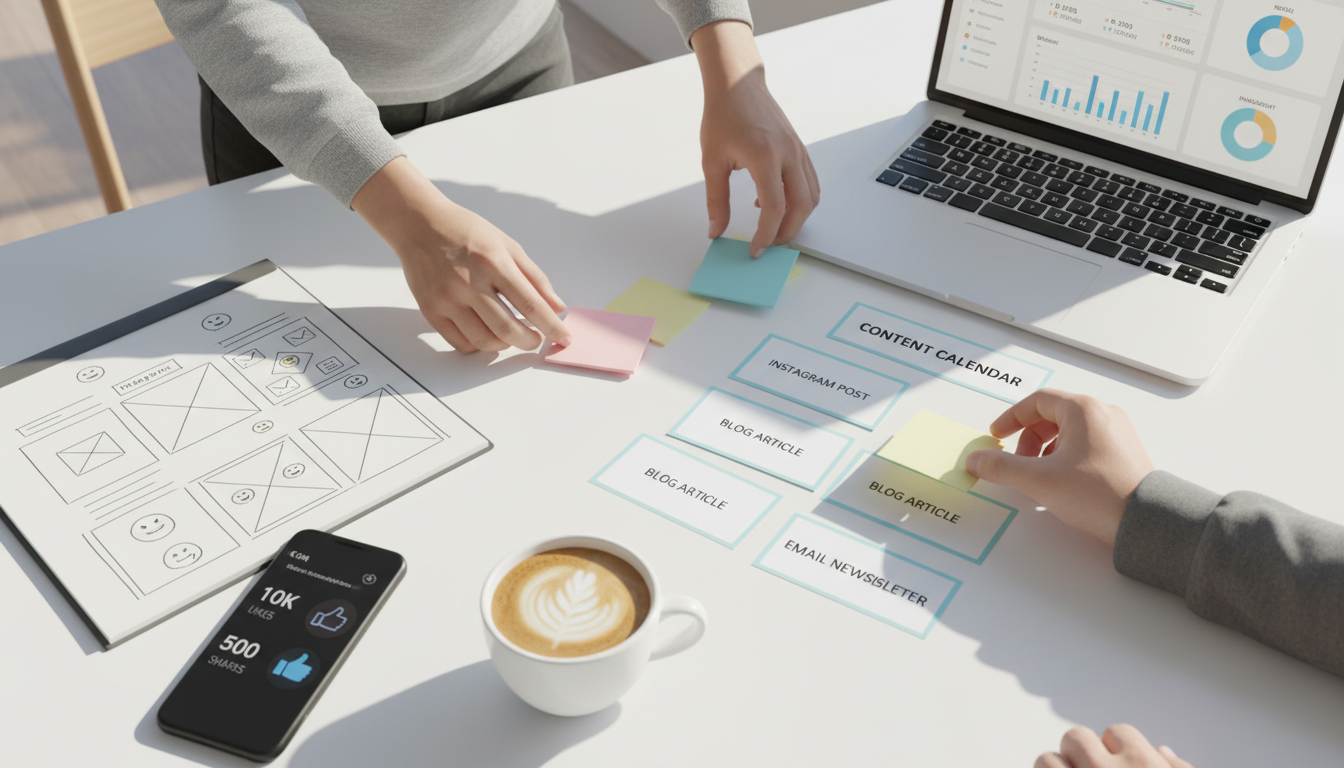
Implementing professional email and SMS marketing for small business through an automated system allows you to maintain the 320 percent revenue boost seen in automated campaigns without lifting a finger during peak hours. You can read more about our AI powered platform to see how we use your specific brand personality and location to generate thirty days of social posts, Google updates, and promotional sequences. LocalContent AI handles the heavy lifting by generating complete calendars and tailored captions automatically.
Instead of the typical manual struggle where a business owner sends one desperate blast on December 20th, our automated marketing packages provide a steady, professional drumbeat of engagement. This consistency builds a stronger brand reputation in the Newark community than sporadic, rushed outreach ever could. With our affordable subscription plans, even the smallest neighborhood business can compete with larger franchises by staying top-of-mind through the entire Q4 rush.
Reconnecting with past customers through personalized holiday campaigns is an effective way to boost your seasonal revenue. By combining the direct reach of SMS with the storytelling power of email, you remind your audience why they chose your brand. If you want expert help crafting these messages or managing your holiday outreach, our team is here to support you. You can explore our Services to see how we help businesses drive growth through high quality, targeted content.